



Table of Contents
Ever open your fridge and realize something you meant to use has quietly gone bad in the back? Maybe it was a bag of spinach you swore you’d put in a smoothie… or leftovers from a meal no one felt like eating again. You’re not alone, here are some stats on food waste from the USDA.
- 30-40% of the American food supply is wasted at the retail and consumer level.
- That doesn’t even count losses between the farm and the retail outlet!
- This is about 133 billion pounds of food, worth about $161 billion, wasted every year.
- Per person, this is approximately 220 pounds of food per year!
- It’s not “just” food.
- Food waste causes waste in water, land, labor, and energy.
- In 2015, the USDA and the EPA joined forces to reduce waste by 50% by 2030.
And while those stats might feel a little overwhelming, I didn’t tell you this to make you feel guilty, or pressure you to aim for zero waste perfection.
Instead, I encourage you to find where food waste is sneaking in and making a few small changes that actually stick.
When you start paying attention, even tiny shifts like freezing leftovers sooner or rethinking how you store produce can help cut down on waste. That means saving money, making your kitchen feel more manageable, and doing a little good for the planet along the way.
In this post, I’m sharing real-life, practical tips that I use myself and recommend to clients all the time. No fluff, no shame. Just strategies that actually work. Let’s dive in.
As an Amazon Associate, I may earn from qualifying purchases when you click on a link.
Dietitian’s Tip:
Reducing food waste doesn’t have to mean doing more. It’s about making small shifts that save time, money, and energy in the long run.
Why Reducing Food Waste Really Matters
Cutting back on food waste isn’t just good for the planet. It’s a win for your budget, your sanity, and your family meals, too.
Here’s what you’ll gain:
- 💰 Save money by using more of what you already have—no more forgotten produce or duplicate buys.
- 🧠 Lighten your mental load. When your fridge is less chaotic, decisions are easier (especially with multiple eaters to feed).
- 🕒 Spend less time meal planning, shopping, or cooking from scratch every night.
- 🍽️ Simplify mealtimes—especially in multivore households—by building meals around what’s already prepped or needs to be used.
- 🌍 Make a positive impact without adding pressure. Even small changes help reduce strain on land, water, and energy resources.
You don’t have to do it all perfectly. But every small shift adds up; to less waste, less stress, and more ease in your kitchen.
Shop with a Flexible Plan
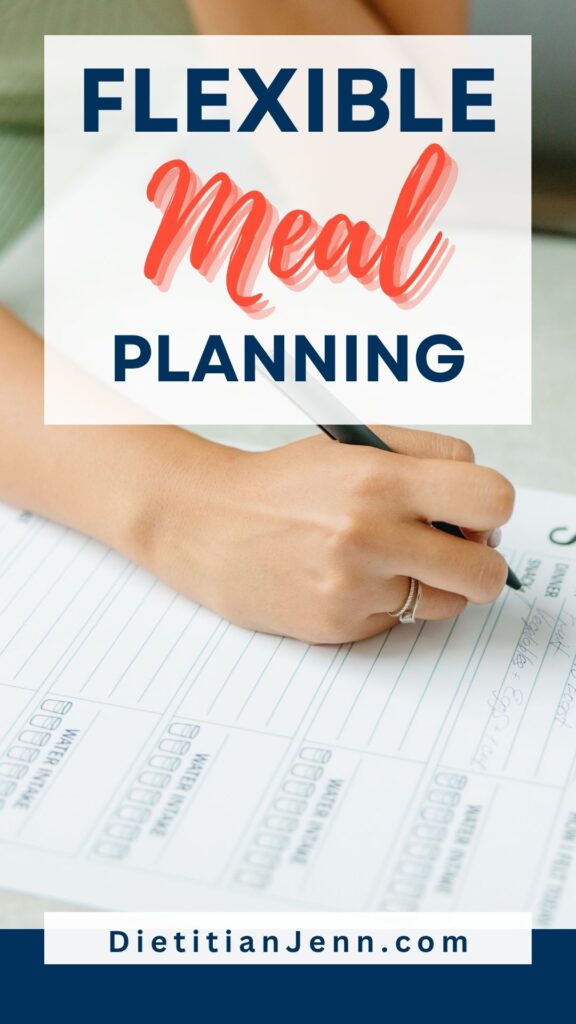
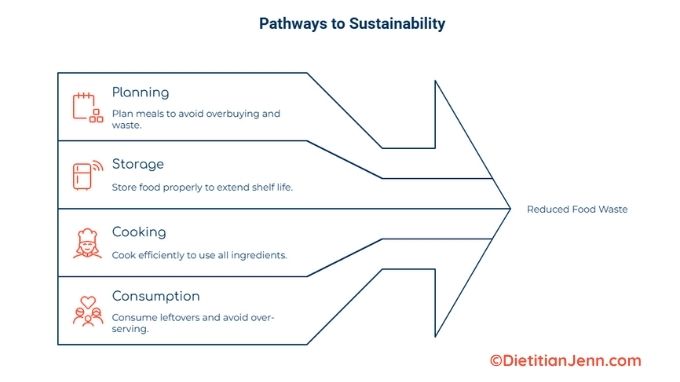
Meal planning is one of the best ways to reduce food waste, but it doesn’t have to mean planning every bite of the week in advance. In fact, the most sustainable meal plans are often the most flexible.
Instead of creating a rigid menu, try this:
- Plan 3 to 4 core meals that use overlapping ingredients.
- Leave space for a “leftovers night” or a night to use up what’s already on hand.
- Keep a list (on your fridge or phone) of foods that will go bad soon, and factor those into your plan.
- See app options below for more help
A flexible approach helps you adjust based on what’s already in your kitchen, what’s on sale, or what your week actually looks like. That means fewer forgotten veggies in the drawer and fewer last-minute takeout orders when plans change.
Do a Fridge and Pantry Check Before Shopping
Ever get home from the store, unload your groceries, and realize… You already had half of what you just bought? Suddenly, you’re staring at three tubs of sour cream and wondering how that happened (again).
Taking just a couple of minutes to scan your fridge, freezer, and pantry before heading out can make a big difference. You don’t need a full inventory; just a quick look to see what you already have and what’s nearing its end.
This small habit eases the mental load of grocery shopping. You’ll avoid duplicates, spot what needs to be used up soon, and spend less time wondering, “Do we have enough pasta at home?”
Plus, it helps you feel more in control of what’s coming in and going out of your kitchen.
Dietitian’s Tip:
Snap a quick photo of your fridge or pantry before you leave. It’s not fancy—but it works.
Store Food Properly to Make it Last
A lot of food waste happens after we bring groceries home simply because we can’t see what we have or we’re not storing it in a way that keeps it fresh.
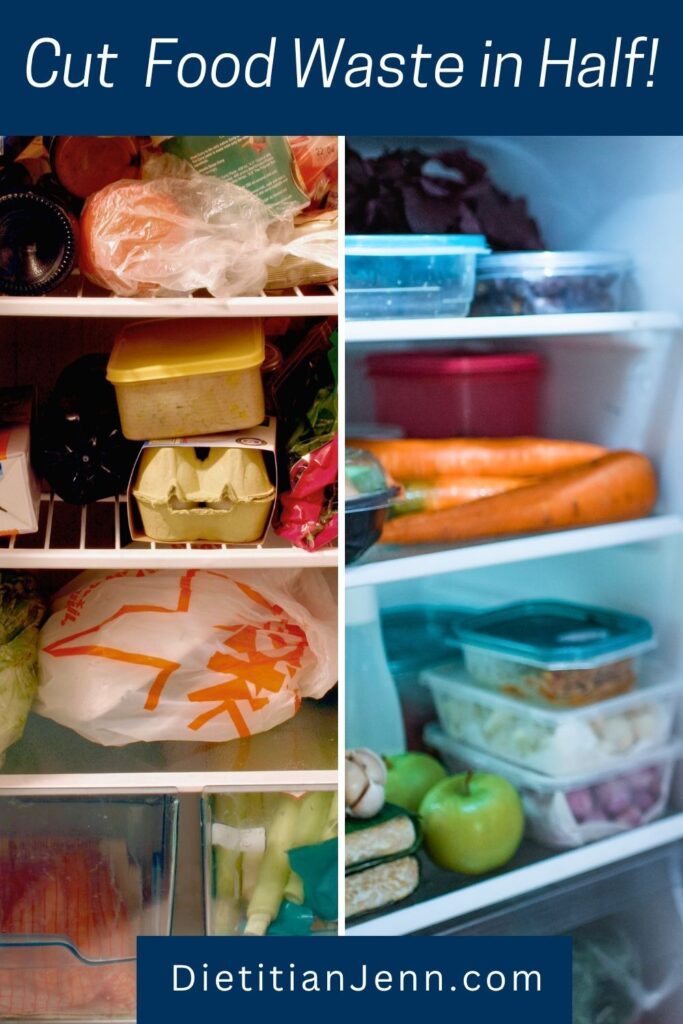
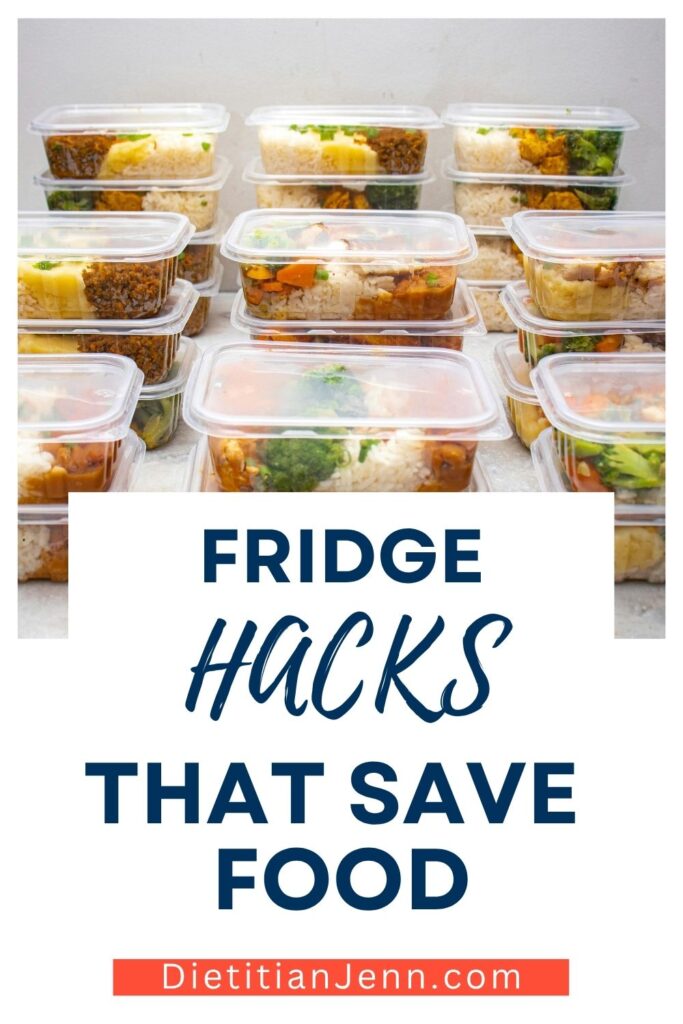
One of the easiest ways to start? Use clear, reusable containers for leftovers, chopped produce, and prepped ingredients. Visible food is more likely to get eaten. A labeled glass container is much harder to ignore than a mystery item shoved in the back of the fridge.
Storage mistakes can also shorten the life of your food. A few quick fixes:
- Keep onions and potatoes separate. Together, they make each other spoil faster.
- Store basil like a bouquet. Trim the stems, pop them in a jar with water, and cover loosely with a produce bag.
- But for other herbs, store loosely wrapped in a cloth in a breathable bag in the high-humidity drawer of the refrigerator.
- Don’t refrigerate tomatoes or bananas until they’re fully ripe. They’ll last longer and taste better.
If you’re not sure where something belongs (counter, fridge, pantry?), a simple food storage chart like this one from Save the Food can help.
Understand Expiration Dates
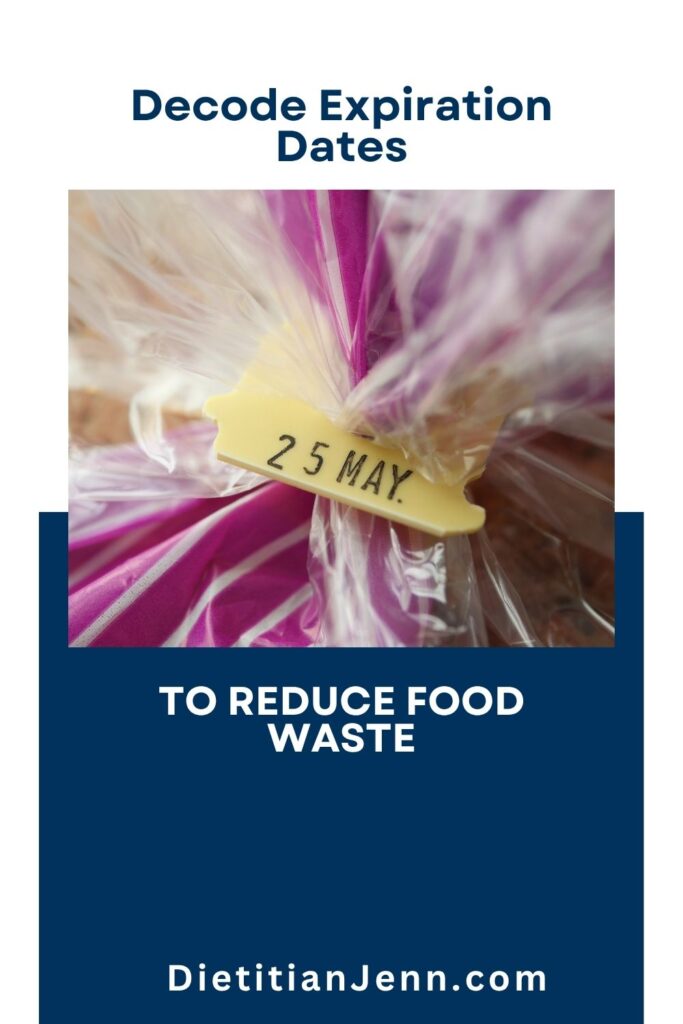
Expiration dates can be confusing and they’re one of the biggest reasons people throw out food that’s still perfectly safe to eat.
Did you know that US federal regulations only require expiration dates on infant formula? That’s part of why expiration dates on food can get so confusing.
While not required, the USDA recommends that food manufacturers use a “best if used by” date to help reduce confusion. This date lets us know when the manufacturer or packager expects the food to reduce in quality or taste. It is not an indicator of safety.
There are still other dates in use. Here’s a quick breakdown:
- “Sell by” is for the stores. It tells retailers when to stop displaying the product for inventory management, not when you need to toss it at home.
- “Use by” is essentially the same as “best if used by.” This phrasing is more ambiguous, and therefore not recommended for package labeling.
- “Freeze by” tells us when to freeze the food to preserve freshness and quality. Again, this is not an indicator of when it is no longer safe to eat the food.
In most cases, your eyes, nose, and common sense are more reliable than the printed date. If it looks okay, smells okay, and hasn’t been opened for weeks, it’s probably safe to eat.
This doesn’t mean you have to push your limits. But it does mean you can feel confident keeping things a little longer than the package suggests.
Note: some states do have further dating requirements, particularly for eggs.
Create a “Use Me First” Bin
One of my favorite low-effort tricks for reducing food waste? A simple bin labeled “Use Me First.”
In my fridge, it’s just a clear container on the middle shelf. I toss in anything that’s nearing its end—half a bell pepper, an open container of hummus, leftover rice, or that one lonely apple that keeps getting passed over. It’s the first place I check when I’m reaching for a snack or throwing together a quick dinner.
This works really well in households where more than one person grabs snacks or cooks. Instead of guessing what to eat first, family members can easily see what to reach for. No more forgotten yogurt cups hiding behind the milk or produce that disappears into a drawer.
You can do the same in your pantry for shelf-stable items, such as open pasta, snack bags, or boxed goods that are almost gone.
Apps
here are some fantastic (and free!) apps out there designed to help you waste less and make the most of what you’ve got. Whether you’re trying to track what’s in your fridge, rescue surplus food from local stores, or share extra from your garden, there’s likely an app that fits your lifestyle.
Here are a few worth checking out:
- Too Good To Go: Buy unsold food from restaurants, bakeries, and grocery stores at a big discount. You don’t get to choose exactly what you get, but that’s part of the fun. And it helps prevent food from getting tossed at the end of the day.
- Flashfood: Similar to Too Good To Go, but focused on grocery store overstock. Great for finding discounted produce, meat, and pantry items nearing their sell-by date.
- No Waste and Nosh: Both help you track what’s in your fridge and pantry, monitor expiration dates, and cut down on forgotten food. Nosh also offers meal and exercise planning features.
- Olio: A community-based sharing app where you can give away or pick up surplus food (and non-food items) from your neighbors. Ideal if you’re moving, overbought something, or just want to make sure nothing goes to waste.
- Remy: A newer app that helps with meal planning based on what’s already in your fridge, designed to reduce food waste and decision fatigue.
- Fresh Food Connect: Got extra from your garden? This app connects home gardeners with local food access organizations so you can donate your surplus produce to those who need it.
Dietitian’s Tip:
Food waste doesn’t just happen in your kitchen. These apps help reduce waste at the community level too.
Freeze Strategically
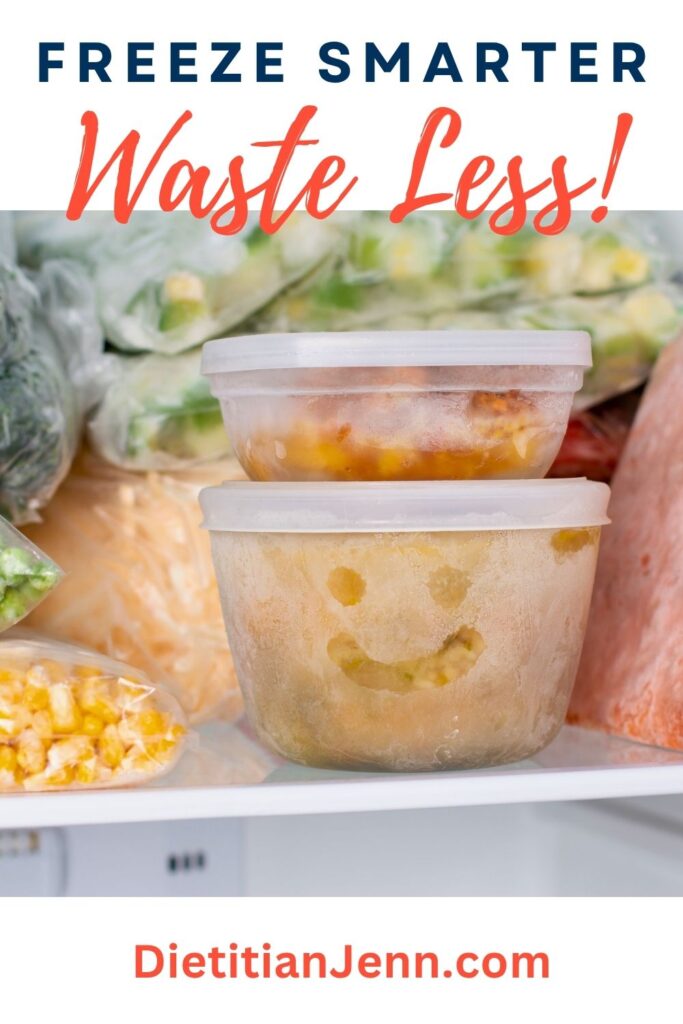
The freezer is one of the most underrated tools for cutting food waste, but it works best when used with a little intention.
Here are a few quick tips to help you freeze smarter:
- Chop produce like bell peppers, onions, or bananas before freezing so they’re recipe-ready.
- Portion out meals or leftovers in individual servings rather than as one large casserole for easy lunches or busy nights.
- Label everything with the date and contents. Trust me: six weeks from now, you won’t remember if that container holds soup or pasta sauce.
You can freeze more than you might think:
- Cooked rice and grains freeze beautifully; just let them cool completely first.
- Milk, shredded cheese, and even tofu can all be frozen (with a few texture changes to expect, though many people feel tofu improves after spending time in the freezer).
- Chop herbs and store in olive oil or water using an ice cube tray.
If your freezer tends to become a black hole of forgotten food, consider starting a simple freezer inventory list on your phone or taped to the door. Just a running log of what you’ve frozen and when you plan to use it.
Freezing isn’t a last resort. It’s a proactive way to stretch your food (and your budget) further.
Reimagine Leftovers Into Something New
Leftovers get a bad rap, but they don’t have to be boring. With a little creativity, yesterday’s meal can become the base for something totally different and delicious.
Think of leftovers as building blocks, not finished meals:
- Roasted veggies can go into tacos, wraps, or blended into a quick soup.
- Pasta becomes pasta salad with a new dressing, or baked into a frittata with eggs and cheese.
- Cooked beans can be mashed into veggie burgers, tossed into quesadillas, or added to grain bowls.
Even small amounts, like a scoop of rice or a bit of cooked lentils, can round out a meal when paired with fresh ingredients or other pantry staples.
The bonus? You save time on cooking, reduce food waste, and avoid falling into a “leftover fatigue” rut.
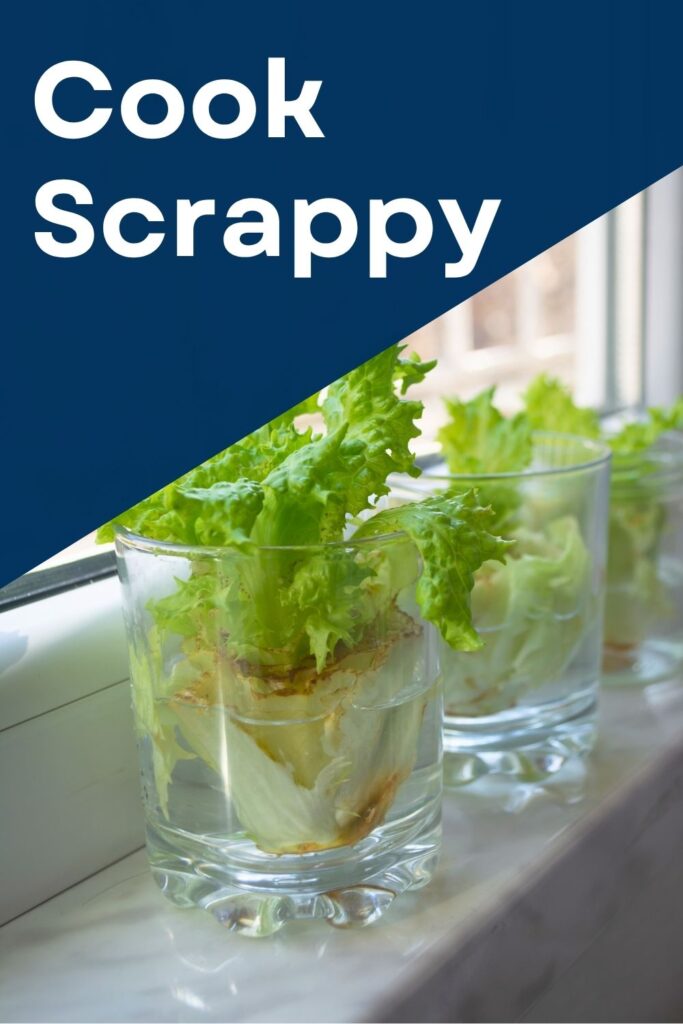
Cook Scrappy (It’s Easier Than You Think)
Some of the best ingredients are the ones we usually toss, just because we’re not used to using them.
Here are a few underrated scraps worth saving:
- Broccoli stems: Peel and slice for stir-fries or shred into slaw.
- Herb stems (like parsley, cilantro, or basil): Chop finely and toss into soups, sauces, or grain dishes.
- Kale or chard ribs: Sauté with garlic for a crunchy side, or chop and cook them into soups or stews.
You can also start a freezer bag just for veggie scraps, carrot peels, onion skins, celery ends, mushroom stems, herb bits—and once it’s full, simmer it into a homemade veggie broth. It’s basically free flavor.
And don’t worry: You don’t have to use every single scrap. This isn’t about perfection—it’s about noticing what you might be able to repurpose instead of tossing.
Serve Smaller Portions to Cut Down on Plate Waste
One of the easiest ways to reduce food waste at home? Simply serve smaller portions to start.
Leftovers in a container can be saved. Food left on someone’s plate? Not so much. That’s why dishing out smaller servings, especially for kids or when offering a new food, can make a big difference.
It also takes the pressure off. No one has to clean their plate just to avoid wasting food, and everyone’s free to go back for seconds if they’re still hungry.
This is especially helpful in multivore households or when introducing a new recipe. Smaller portions mean less waste and a more relaxed eating experience.
Dietitian’s Tip:
Serving less at first gives everyone more flexibility, it respects hunger cues and makes leftovers easier to save.
Track What You Toss (Just for a Week or Two)
If you’re not sure where your food waste is coming from, try keeping track of what you throw away for a week or two.
This doesn’t need to be anything fancy. You can use a note on your phone, a piece of paper on the fridge, or even a whiteboard. The idea is just to notice patterns. Maybe it’s always half a bunch of cilantro, that container of yogurt you meant to eat, or a forgotten slice of pizza that didn’t survive the fridge.
This isn’t about creating another task on your to-do list or feeling bad about what gets tossed. It’s simply about becoming more aware of what’s slipping through the cracks.
And once you spot a trend, you can adjust. Buy smaller amounts, use it earlier in the week, or freeze it right away. Sometimes, just noticing is enough to make a change stick.
Awareness is a powerful tool. You can’t fix what you don’t see. But once you do, small shifts become a whole lot easier.
Make Creative Use of Odd Bits
You know those random odds and ends that aren’t quite enough for a full meal, but feel like a waste to toss? Those are perfect for getting creative.
A few quick ideas to stretch those almost-gone ingredients:
- Soft or overripe fruit → blend into smoothies, bake into muffins, or simmer into a quick compote.
- Random bread ends or crusts → pulse into breadcrumbs, cube for homemade croutons, or use in French toast bakes.
- The last few spoonfuls of yogurt → mix into muffin batter, stir into sauces, or use as a tenderizing base for marinades.
These small scraps can add up to something delicious, and they’re often just waiting for a second chance.
Bonus tip: This is a great way to get kids involved. Let them help decide what to make with leftover bits. Turn it into a “kitchen experiment” and see what you can come up with together. You might just create a new family favorite.
Plan a Weekly “Clear the Fridge” Meal
One of the most effective ways to stay ahead of food waste is to plan for it, by building in a weekly “clear the fridge” meal.
Pick a regular night that works for your schedule: Friday before the weekend grocery run, or Sunday night before the new week begins. The goal is to use up anything that’s lingering before it goes bad.
Some flexible meal ideas that work with just about any combo of ingredients:
- Grain bowls with leftover veggies, beans, sauces, or proteins
- Stir-fries that turn sad veggies into something flavorful fast
- Omelets or frittatas that use up small amounts of cheese, herbs, or roasted veggies
- Soups made from broth, odds and ends, and whatever’s on its last leg
It doesn’t have to be fancy. In fact, it can be a fun challenge: “What can we make from what we already have?” Kids can get involved by picking a theme or helping name the creation.
Think, “Chopped, Home Edition.”
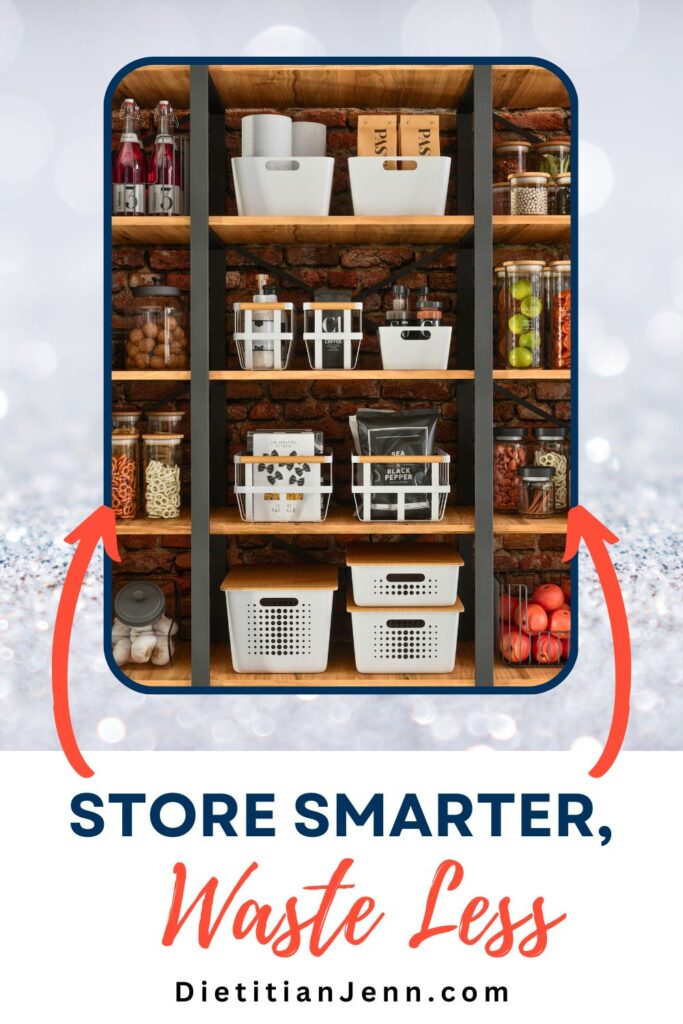
Organize Your Pantry and Fridge Wisely
Your kitchen should work for you, not the other way around. Just because your fridge has a crisper drawer or your pantry came with certain shelves doesn’t mean you have to use them the way they were labeled.
Take a little time to organize your space in a way that actually supports how you cook and eat. That might mean:
- Pre-chopping fruits and veggies and storing them at eye level so they’re the first thing you see (and grab).
- Creating a snack bin in the fridge or pantry with easy, ready-to-eat options for busy days; or busy kids.
- Moving ingredients you use all the time to the front and keeping specialty items or backstock out of the way.
I keep all my condiments in one drawer, and cheese goes in another. If someone wants ketchup or shredded cheddar, they’ll dig for it. But no one’s digging for leftovers or the last of those baby carrots.
Furthermore, I keep leftovers (in clear containers) and fruits and veggies to snack on at eye level and in the front. The vegetables and other items purchased for a particular meal are stored behind those, so they’re still available when I need them. Cut down on surprises.
Bananas, oranges, apples, and grape tomatoes are on the counter next to the fridge.
This kind of setup helps prevent waste because food is less likely to get forgotten or buried behind five bottles of salad dressing. It also makes everyday meals feel easier, which is a win in any household.
Dietitian’s Tip:
There’s no “right way” to organize your kitchen—only what helps you use what you have and feel less overwhelmed when you open the fridge.
Compost What You Can’t Use
Even with the best intentions, some food will still go uneaten. That’s okay. But when food can’t be saved, composting is a great way to keep it out of the landfill and give it a second life.
Composting reduces the environmental impact of food waste by turning scraps into nutrient-rich soil instead of methane-producing trash. That’s a win, even if the food never made it to your plate.
There are a few easy ways to get started:
- City compost programs (if available) often provide bins or pickup services.
- Community gardens
- DIY backyard compost bins can be low-maintenance once you get the hang of them.
- Countertop composters or small indoor bins make it easier for apartment dwellers or anyone without outdoor space.
And remember: not everything has to be saved, used up, or turned into something new. But it also doesn’t have to be tossed in the trash.
Teach the Household to Help
Reducing food waste doesn’t have to be a solo project. And honestly, it works a lot better when everyone’s on board.
Here are a few easy ways to make it a team effort:
- Label leftovers with the date and what it is (so no one has to play “fridge mystery”). Especially if said leftover contains when a the household vegetarian doesn’t expect it too. Or in the case of allergies.
- Use stickers, bins, or a “use first” shelf to highlight what needs to be eaten soon
- Talk about what’s available before grocery runs or meal planning so everyone knows what’s in the mix
These small steps make it easier for partners, kids, roommates, whoever shares your kitchen, to help out. You don’t have to be the only one remembering what needs to be used or where the leftovers are hiding.

Final Thoughts
You don’t need to overhaul your entire kitchen routine overnight. Start by picking one or two tips that feel doable this week. Maybe it’s setting up a “use me first” bin, doing a quick pantry check before shopping, or rethinking how you store leftovers.
Notice what feels easy. What saves you time? What actually gets eaten that might have been tossed before? Those are your wins.
Reducing food waste isn’t about being perfect. It’s about being a little more intentional, one small shift at a time.
What about you? I’d love to hear which tip you’re trying first, or your own favorite way to use up ingredients. Drop it in the comments!
Want more low-stress kitchen tips? What about inspirational multivore stories?
👉 Sign up for my newsletter for recipes, practical meal ideas, and smart strategies like these—delivered weekly.
Free Resource:
☀️ Grab my No-Cook Summer Meal Guide for easy ways to use up ingredients without turning on the stove.

Jennifer Hanes MS, RDN, LD is a registered dietitian, mom, wife, and vegetarian in North Texas. She has dedicated Dietitian Jenn to be a source of information, ideas, and inspiration for people like her, vegetarians that live with people with different dietary beliefs and/or needs in a multivore household.